Explore why proper roof ventilation is crucial for energy efficiency, preventing moisture buildup, and extending roof life.
Explore why proper roof ventilation is crucial for energy efficiency, preventing moisture buildup, and extending roof life.
Understanding Roof Ventilation Importance
Why Roof Ventilation Matters for Your Home's Health and Energy Bills
Hey there, homeowners! Let's talk about something super important but often overlooked: roof ventilation. You might think your roof's main job is just to keep the rain out, right? Well, you're not wrong, but there's a whole lot more going on up there, especially when it comes to air circulation. Proper roof ventilation isn't just a nice-to-have; it's absolutely crucial for your home's overall health, your comfort, and even your wallet. We're talking about energy efficiency, preventing nasty moisture issues, and seriously extending the lifespan of your entire roofing system. So, let's dive in and uncover why this often-hidden hero of home maintenance deserves your full attention.
The Science Behind Roof Ventilation How it Works
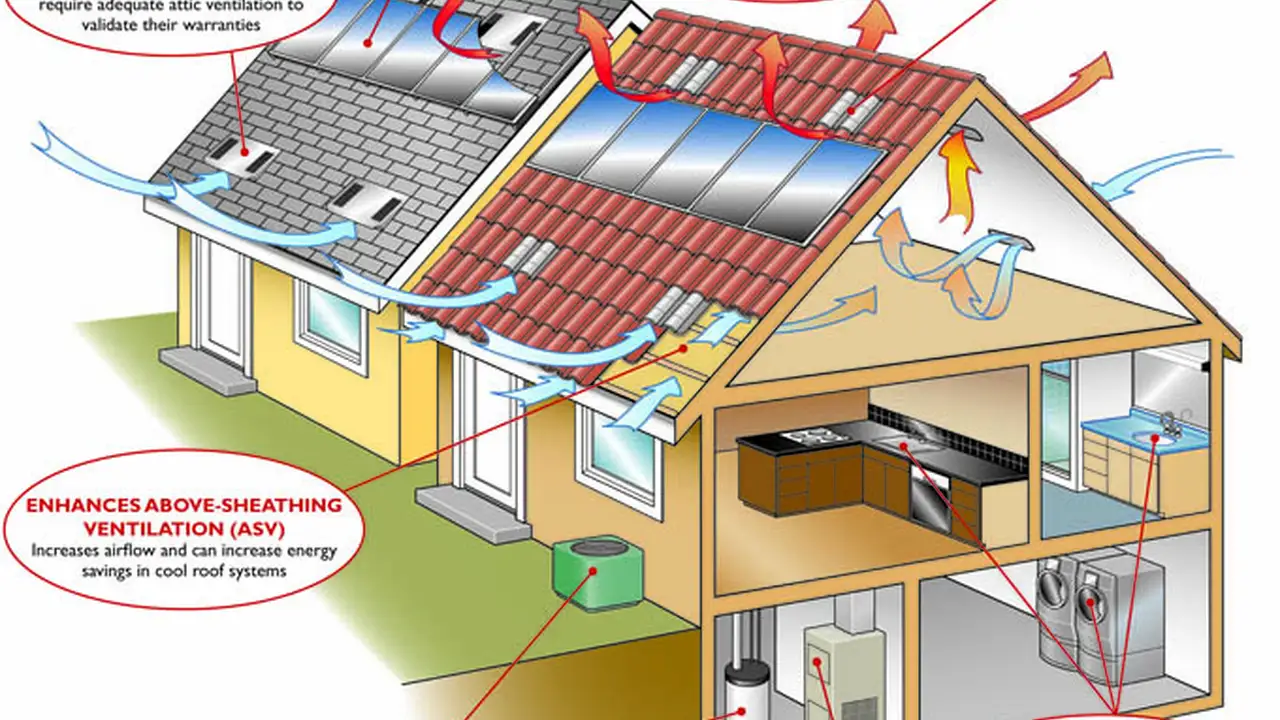
At its core, roof ventilation is all about creating a continuous flow of air. Think of it as your attic breathing. This system typically involves two main components: intake vents and exhaust vents. Intake vents are usually located at the lowest part of your roof, often in the soffits or eaves, allowing cooler, fresh air to enter the attic. Exhaust vents, on the other hand, are positioned at the highest point of your roof, like ridge vents or static vents, letting hot, stale air escape. The magic happens through natural convection: hot air rises, creating a natural draw that pulls in cooler air from below. This constant air exchange is what keeps your attic temperature regulated and prevents a whole host of problems.
Key Benefits of Proper Roof Ventilation Energy Savings and Comfort
One of the biggest perks of a well-ventilated roof is the impact on your energy bills. In warmer climates, an unventilated attic can become an oven, with temperatures soaring to 150 degrees Fahrenheit or more. This superheated air radiates down into your living spaces, forcing your air conditioning system to work overtime to keep your home cool. With proper ventilation, that hot air escapes, reducing the heat load on your AC and significantly lowering your cooling costs. Conversely, in colder climates, ventilation helps prevent heat from escaping your living space and melting snow on your roof, which can lead to ice dams. By keeping the attic cool, it helps maintain a consistent temperature, reducing heat loss from your home and potentially lowering heating costs too. It's a win-win for your comfort and your budget.
Preventing Moisture Buildup and Its Damaging Effects
Moisture is the arch-nemesis of any home, and your attic is particularly vulnerable. Everyday activities like showering, cooking, and even breathing generate moisture that can migrate into your attic space. Without proper ventilation, this moisture gets trapped, leading to condensation. This isn't just a minor inconvenience; it can cause serious damage. We're talking about mold and mildew growth, which can trigger allergies and respiratory issues, rot in your roof decking and framing, and even compromise the structural integrity of your home. Proper ventilation ensures that any moisture that enters the attic is quickly carried away, keeping your attic dry and healthy.
Extending Your Roof's Lifespan and Protecting Your Investment
Did you know that poor ventilation can actually shorten the life of your roof? In hot attics, the extreme heat can literally bake your shingles from the inside out, causing them to curl, crack, and degrade much faster than they should. This premature aging means you'll be looking at a costly roof replacement much sooner than anticipated. By maintaining a cooler, drier attic environment, proper ventilation protects your roofing materials from these harsh conditions, allowing them to perform as intended and last for their full expected lifespan. It's a smart investment that pays off in the long run.
Common Types of Roof Ventilation Systems and Their Applications
There's a variety of ventilation systems out there, each with its own advantages. Let's break down some of the most common ones:
Ridge Vents The Seamless and Effective Exhaust Solution
Ridge vents are arguably the most popular and effective exhaust vents. They're installed along the entire peak of your roof, creating a continuous opening that allows hot air to escape evenly. They're often covered with a cap that matches your shingles, making them virtually invisible from the ground. They work best when paired with continuous soffit intake vents.
Soffit Vents Essential Intake for Balanced Airflow
Soffit vents are typically continuous strips or individual circular vents installed in the soffit (the underside of your roof's overhang). They are crucial for allowing cooler, fresh air to enter the attic, creating the necessary intake for a balanced ventilation system. Without adequate intake, your exhaust vents can't work efficiently.
Gable Vents Traditional and Decorative Ventilation Options
Gable vents are louvered openings installed on the gable ends of your house. While they can provide some airflow, they are generally less effective than a balanced ridge and soffit system because they only ventilate a portion of the attic and can create dead air spots. However, they can be a good option for homes without soffits or as a supplementary vent.
Static Vents and Box Vents Simple and Reliable Exhaust
These are individual vents installed on the roof surface, typically near the ridge. They rely on wind and convection to exhaust hot air. While effective for smaller attics or as supplementary vents, they don't offer the continuous, even ventilation of a ridge vent.
Powered Attic Fans When Mechanical Assistance is Needed
Powered attic fans use electricity to actively pull hot air out of the attic. They can be very effective, especially in very hot climates or attics with complex layouts. However, they can consume electricity, and if not properly installed with sufficient intake, they can create negative pressure, potentially drawing conditioned air from your living space into the attic, which is counterproductive.
Turbine Vents Wind Driven Exhaust for Continuous Airflow
Turbine vents are those spinning vents you sometimes see on roofs. They use wind power to create a vacuum that pulls hot air out of the attic. They're a good option for continuous ventilation without electricity, but their effectiveness can vary depending on wind conditions.
Choosing the Right Ventilation System for Your Home Factors to Consider
Selecting the best ventilation system isn't a one-size-fits-all situation. Here's what you need to think about:
Roof Pitch and Design How it Influences Ventilation Choices
The slope of your roof (pitch) and its overall design play a big role. Ridge vents are ideal for roofs with a continuous ridge, while gable vents might be more suitable for homes with prominent gables and no soffits. Complex rooflines might require a combination of different vent types.
Climate Considerations Hot Humid vs Cold Dry Regions
Your local climate is a major factor. In hot, humid regions like much of Southeast Asia or the southern US, maximizing heat and moisture exhaust is paramount. In colder climates, preventing ice dams and maintaining a consistent attic temperature is key. Some systems are better suited for specific climatic challenges.
Attic Size and Configuration Ensuring Adequate Airflow
The size and layout of your attic will determine the amount of ventilation needed. A larger attic requires more intake and exhaust capacity. Obstructions like firewalls or knee walls can also impact airflow and might necessitate additional venting solutions.
Building Codes and Local Regulations Compliance is Key
Always check your local building codes. There are often specific requirements for attic ventilation, including minimum net free area (NFA) for vents, which is the actual open area through which air can pass. Compliance ensures safety and avoids potential issues during inspections.
Recommended Ventilation Products and Systems for Optimal Performance
Let's talk about some specific products and systems that consistently get high marks for performance and reliability. Remember, the best system is often a combination of intake and exhaust working together.
GAF Cobra Ridge Vent III A Top Tier Ridge Vent
GAF is a leading name in roofing, and their Cobra Ridge Vent III is a fantastic choice for exhaust. It's designed for maximum airflow and is virtually invisible once installed. It's made from a durable, weather-resistant material and comes with a filter to prevent insect and debris entry. It's compatible with most shingle types and offers excellent performance in both hot and cold climates. Expect to pay around $3-5 per linear foot for the material, not including installation. It's widely available across the US and Southeast Asia.
Owens Corning VentSure InFlow Vent The Smart Soffit Solution
For intake, the Owens Corning VentSure InFlow Vent is a continuous soffit vent that provides excellent airflow without being noticeable. It's designed to be easy to install and offers a clean, finished look. It's made from durable, UV-resistant materials. This product is great for ensuring a balanced ventilation system when paired with a ridge vent. Material cost is typically in the range of $2-4 per linear foot. Owens Corning products are well-distributed globally.
If you're looking for a non-electric exhaust option, Lomanco Whirlybird Turbine Ventilators are a solid choice. They come in various sizes (12-inch, 14-inch, etc.) and are designed to spin with minimal wind, continuously drawing hot air out of your attic. They're made from aluminum or galvanized steel for durability. A 12-inch turbine might cost around $50-80, while larger ones can go up to $150. They are a common sight in many regions, including parts of Southeast Asia, due to their effectiveness in windy conditions.
Broan NuTone Powered Attic Ventilators For Active Air Movement
When passive ventilation isn't enough, a powered attic fan like those from Broan NuTone can be a game-changer. Their models often feature adjustable thermostats and humidistats, allowing them to operate only when needed. For example, the Broan NuTone 345SOWW is a popular model that can ventilate up to 1600 square feet. Prices for powered attic fans can range from $150 to $400, depending on capacity and features. These are widely available in the US and can be found in major hardware stores.
Air Vent Inc ShingleVent II The Discreet Ridge Vent
Another excellent ridge vent option is the Air Vent Inc ShingleVent II. Similar to GAF's offering, it provides continuous, low-profile exhaust ventilation. It's designed to be installed under the ridge cap shingles, making it virtually invisible. It's durable and comes with an external baffle to deflect wind and rain. Material costs are comparable to other quality ridge vents, around $3-5 per linear foot. Air Vent products are well-regarded in the industry.
Installation Best Practices and Common Mistakes to Avoid
Even the best ventilation products won't perform if installed incorrectly. Here are some key best practices and pitfalls to steer clear of:
Balanced Ventilation The Golden Rule of Airflow
The most critical principle is balanced ventilation: you need an equal amount of intake and exhaust. A common mistake is having plenty of exhaust but insufficient intake, or vice versa. This imbalance can lead to inefficient airflow, or even worse, can cause exhaust vents to pull air from other exhaust vents, short-circuiting the system.
Proper Placement of Intake and Exhaust Vents Maximizing Convection
Intake vents should always be at the lowest point of the attic (soffits/eaves), and exhaust vents at the highest point (ridge). This maximizes the natural convection effect, allowing hot air to rise and escape efficiently. Placing exhaust vents too low or intake vents too high will disrupt this natural flow.
Ensuring Unobstructed Air Channels From Soffit to Ridge
Make sure the path for air from the soffit to the ridge is clear. Insulation can often block soffit vents, preventing air from entering the attic. Baffles (also known as rafter vents or insulation stops) should be installed in each rafter bay to create a clear channel between the soffit vent and the attic space, preventing insulation from blocking airflow.
Avoiding Mixed Ventilation Systems The Short Circuit Risk
This is a big one! Never mix different types of exhaust vents, especially passive and powered systems, or multiple types of passive exhaust vents (e.g., ridge vents and gable vents). This can create a 'short circuit' where one exhaust vent pulls air from another exhaust vent instead of from the intake vents, rendering the entire system ineffective and potentially drawing conditioned air from your home. Stick to one type of exhaust (e.g., ridge vent) paired with adequate intake (e.g., soffit vents).
Sealing Air Leaks Between Attic and Living Space Energy Efficiency Boost
While not strictly ventilation, sealing air leaks between your attic and the conditioned living space below is crucial for energy efficiency. Gaps around light fixtures, plumbing stacks, and attic hatches can allow conditioned air to escape into the attic, increasing your energy bills. Seal these leaks with caulk, foam, or weatherstripping before optimizing your ventilation.
Maintenance Tips for Your Roof Ventilation System
Once installed, your ventilation system isn't entirely set-it-and-forget-it. A little maintenance goes a long way:
Regular Inspections Checking for Blockages and Damage
Periodically inspect your vents for any blockages from leaves, bird nests, or other debris. Make sure they are clear and unobstructed. Also, check for any physical damage to the vents themselves.
Cleaning Soffit Vents Ensuring Continuous Intake
Soffit vents can get clogged with dust, paint, or insulation over time. Gently clean them to ensure a continuous flow of intake air. If you have perforated soffits, ensure the holes are clear.
Monitoring Attic Temperature and Humidity Indicators of Performance
Consider installing an attic thermometer and hygrometer (humidity sensor). This allows you to monitor the conditions in your attic and confirm that your ventilation system is performing effectively. If temperatures or humidity levels are consistently high, it might indicate an issue.
Addressing Insulation Issues Maintaining Clear Air Channels
Ensure that insulation isn't blocking your soffit vents or the air channels created by baffles. If insulation has shifted, gently reposition it to maintain clear airflow paths.
The Long Term Value of a Properly Ventilated Roof
Investing in proper roof ventilation might seem like a small detail, but its impact is anything but. From significant energy savings and enhanced indoor comfort to preventing costly moisture damage and extending the life of your entire roof, the benefits are substantial and long-lasting. It's a fundamental component of a healthy, efficient, and durable home, protecting your biggest investment for years to come. So, take a moment to consider your attic's breathing habits – your home will thank you for it!
:max_bytes(150000):strip_icc()/277019-baked-pork-chops-with-cream-of-mushroom-soup-DDMFS-beauty-4x3-BG-7505-5762b731cf30447d9cbbbbbf387beafa.jpg)