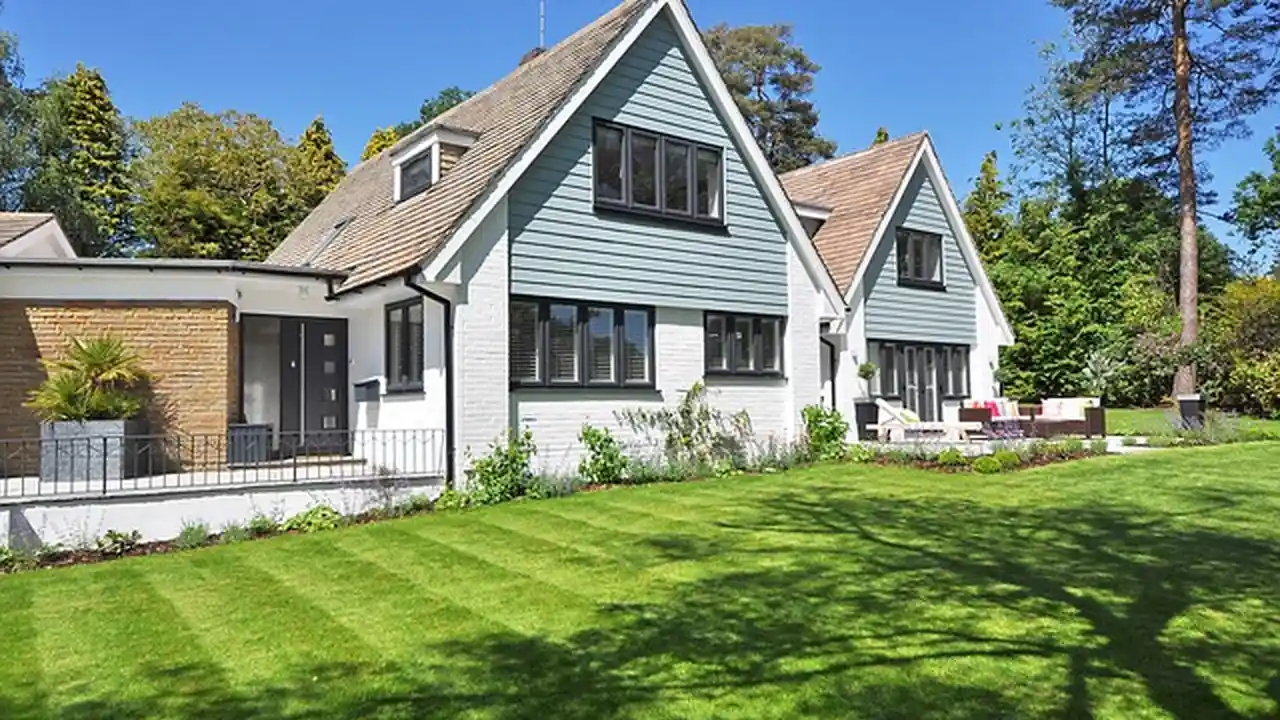
Consider using a home equity loan to finance significant roof upgrades or replacements for your property.
Consider using a home equity loan to finance significant roof upgrades or replacements for your property.
Home Equity Loans for Roof Upgrades
Understanding Home Equity Loans for Roofing Projects
So, you're thinking about a big roof upgrade or maybe even a full replacement, huh? That's a significant investment, and it's totally normal to wonder how you're going to pay for it. While there are several ways to finance a new roof, one option that often comes up, especially for homeowners with a good chunk of equity built up, is a home equity loan. But what exactly is a home equity loan, and how does it work for something like a roof project?
Basically, a home equity loan lets you borrow money using your home's equity as collateral. Equity is the difference between what your home is worth and what you still owe on your mortgage. So, if your house is valued at $400,000 and you still owe $200,000, you have $200,000 in equity. Lenders typically let you borrow a percentage of that equity, often up to 80% or 85%. You get a lump sum of cash upfront, and then you pay it back over a fixed period, usually with a fixed interest rate. Think of it like a second mortgage, because that's essentially what it is.
This can be a really attractive option for a roof upgrade because you're often looking at a substantial cost. A new roof isn't cheap, and using a home equity loan can provide the funds you need without draining your savings or racking up high-interest credit card debt. Plus, the interest rates on home equity loans are generally lower than personal loans or credit cards because your home is securing the loan. This means less money spent on interest over the life of the loan, which is always a good thing.
Benefits of Using Home Equity for Your New Roof
Why might a home equity loan be a smart move for your roofing project? Let's break down some of the key advantages.
First off, as we just touched on, the lower interest rates are a huge draw. Because your home acts as collateral, lenders see less risk, and they pass those savings on to you in the form of more favorable interest rates. This can translate to significant savings compared to other financing methods, especially for a large expense like a roof replacement.
Then there's the fixed interest rate and predictable payments. With a home equity loan, you'll typically have a fixed interest rate, meaning your monthly payments will stay the same throughout the loan term. This makes budgeting much easier, as you know exactly what to expect each month. No surprises, which is always nice when you're managing household finances.
Another big plus is the lump sum disbursement. When you get a home equity loan, you receive all the money at once. This is super convenient for a roofing project because contractors often require a significant upfront deposit and then progress payments. Having the full amount available means you can pay your contractor on schedule, potentially even negotiating better terms if you can pay quickly.
And let's not forget about potential tax deductions. In some cases, the interest you pay on a home equity loan might be tax-deductible if the funds are used for home improvements. This isn't always the case, and tax laws can change, so it's always a good idea to chat with a tax advisor to see if this applies to your specific situation. But if it does, it's another way to save some money.
Finally, using a home equity loan can help you avoid high-interest credit card debt. Putting a $20,000 or $30,000 roof on a credit card is a recipe for financial stress, given the typically very high interest rates. A home equity loan offers a much more responsible and affordable way to finance such a large home improvement.
Comparing Home Equity Loans with Other Financing Options for Roofing
Okay, so home equity loans sound pretty good, but how do they stack up against other ways you might finance a roof? It's important to look at the whole picture.
Home Equity Loan vs HELOC Home Equity Line of Credit
These two often get confused, but they're quite different. A home equity loan gives you a lump sum with a fixed interest rate and fixed payments. A Home Equity Line of Credit (HELOC), on the other hand, is more like a credit card. You get a line of credit that you can draw from as needed, up to a certain limit. HELOCs usually have variable interest rates, meaning your payments can fluctuate. For a single, large expense like a roof, a home equity loan is often preferred because of its predictability. If you anticipate needing funds for various home projects over time, a HELOC might be more suitable, but for a one-off roof replacement, the fixed nature of a home equity loan is usually a better fit.
Home Equity Loan vs Personal Loan for Roof Financing
Personal loans are unsecured, meaning they don't require collateral. This sounds appealing, but it also means higher interest rates because the lender is taking on more risk. The loan amounts for personal loans might also be lower than what you can get with a home equity loan, which could be an issue for a full roof replacement. While a personal loan can be quicker to get, the higher cost of borrowing usually makes a home equity loan a more economical choice for a substantial roofing project.
Home Equity Loan vs Credit Cards for Roof Repairs
Using credit cards for a roof replacement is generally not recommended unless it's a very small repair that you can pay off immediately. Credit cards have the highest interest rates among these options, and carrying a large balance can quickly become unmanageable. While convenient for small purchases, they are usually a poor choice for financing a major home improvement like a roof.
Home Equity Loan vs Contractor Financing Options
Many roofing contractors offer their own financing plans, often through third-party lenders. These can be convenient, sometimes offering promotional periods with 0% interest. However, once the promotional period ends, the interest rates can jump significantly, often higher than a home equity loan. Always read the fine print carefully and compare the total cost of contractor financing with a home equity loan before committing.
Eligibility Requirements for a Home Equity Loan for Your Roof
So, you're leaning towards a home equity loan. Great! But what do you need to qualify? Lenders look at a few key things to determine your eligibility and the terms of your loan.
Sufficient Home Equity for Your Roofing Project
This is probably the most important factor. As mentioned, lenders typically allow you to borrow up to 80% or 85% of your home's equity. So, you need to have enough equity built up to cover the cost of your roof replacement. For example, if your home is worth $350,000 and you owe $150,000, you have $200,000 in equity. If the lender's limit is 80%, you could potentially borrow up to $160,000. Make sure the amount you need for your roof falls within this limit.
Good Credit Score for Favorable Loan Terms
Your credit score plays a significant role in determining whether you qualify for a home equity loan and what interest rate you'll receive. Generally, a FICO score of 680 or higher is considered good, and a score of 740 or above will likely get you the best rates. A lower credit score might still allow you to qualify, but you'll probably face higher interest rates, making the loan more expensive over time. It's always a good idea to check your credit score before applying and address any issues if possible.
Stable Income and Debt to Income Ratio for Loan Approval
Lenders want to see that you have a stable income to comfortably make your monthly loan payments. They'll also look at your debt-to-income (DTI) ratio, which is the percentage of your gross monthly income that goes towards paying your debts. A DTI ratio of 43% or lower is generally preferred, though some lenders might go a bit higher. A lower DTI indicates that you have more disposable income to handle additional debt, making you a less risky borrower.
Other Factors Affecting Home Equity Loan Approval
Beyond these main points, lenders might also consider other factors. These could include the age and condition of your home (though a new roof will certainly improve the condition!), your employment history, and your overall financial stability. Some lenders might also have minimum loan amounts, so if your roof project is on the smaller side, you might need to consider other options.
The Application Process for a Home Equity Loan for Roof Replacement
Applying for a home equity loan isn't as complicated as your initial mortgage, but it does involve a few steps. Here's a general overview of what to expect.
Gathering Necessary Documents for Your Loan Application
Before you even start, it's smart to gather all the paperwork you'll need. This typically includes:
* **Proof of income:** Pay stubs, W-2s, tax returns (usually for the past two years).
* **Bank statements:** To show your financial stability and ability to make payments.
* **Mortgage statements:** To verify your current mortgage balance and payment history.
* **Property tax statements and homeowner's insurance policy:** To confirm ownership and coverage.
* **Identification:** Driver's license or other government-issued ID.
Having these documents ready will speed up the application process significantly.
Finding the Right Lender for Your Roofing Project
Don't just go with the first bank you see! Shop around. Check with your current mortgage lender, local banks, credit unions, and online lenders. Compare interest rates, fees, loan terms, and customer service. A small difference in interest rate can save you thousands over the life of the loan. Look for lenders who specialize in home equity products and have good reviews.
Home Appraisal and Loan Underwriting Process
Once you apply, the lender will typically order a home appraisal to determine your home's current market value. This is crucial for calculating your available equity. After the appraisal, your application goes through underwriting. This is where the lender reviews all your financial information, credit history, and the appraisal to make a final decision on your loan. They'll verify everything you've submitted and assess the risk.
Closing on Your Home Equity Loan and Receiving Funds
If approved, you'll move to the closing stage. This involves signing a lot of paperwork, including the loan agreement and disclosure statements. Make sure you understand all the terms and conditions before you sign. After closing, the funds will be disbursed to you, usually as a lump sum directly deposited into your bank account. Then, you're ready to pay for that new roof!
Specific Product Recommendations and Scenarios for Roof Upgrades
Alright, let's get into some practical scenarios and specific product recommendations for roof upgrades, keeping in mind how a home equity loan can help you achieve these.
Scenario 1 Upgrading to High-Performance Asphalt Shingles
Many homes in the US and Southeast Asia have asphalt shingle roofs. If yours is old, worn out, or just basic, upgrading to a high-performance architectural or designer shingle can significantly boost curb appeal, durability, and even energy efficiency. These shingles are thicker, often have a more dimensional look, and come with better warranties.
**Recommended Products:**
* **GAF Timberline HDZ:** This is a very popular architectural shingle. It offers a great balance of aesthetics, durability, and value. GAF's LayerLock technology and StainGuard Plus algae protection are big selling points. They come with a wind warranty of up to 130 mph, which is fantastic for storm-prone areas. Expect to pay around $100-$150 per square (100 sq ft) for materials, not including installation. Installation costs can vary widely but often range from $300-$600 per square depending on complexity and location.
* **CertainTeed Landmark Pro:** Another top-tier architectural shingle, known for its vibrant color blends and heavier weight, which contributes to its durability. It also offers excellent wind resistance and algae protection. Material costs are similar to GAF Timberline HDZ, in the $100-$160 per square range.
**Why a Home Equity Loan is Great Here:** A full asphalt shingle roof replacement can easily run from $10,000 to $30,000 or more, depending on the size and complexity of your roof. A home equity loan provides the lump sum needed to cover these costs, allowing you to invest in quality materials and a reputable contractor without financial strain.
Scenario 2 Investing in a Durable Metal Roof
Metal roofs are gaining popularity for their incredible longevity, energy efficiency, and resistance to extreme weather. They're a fantastic choice for both the US (especially in areas with heavy snow or high winds) and Southeast Asia (due to heat reflection and monsoon resistance).
**Recommended Products:**
* **Standing Seam Metal Roof (e.g., from Sheffield Metals or Fabral):** This is the Cadillac of metal roofs. The panels are joined by raised seams, which are mechanically fastened, offering superior weather protection and a sleek, modern look. They can last 50+ years. Material costs for standing seam can range from $300-$800+ per square, depending on the metal type (steel, aluminum, copper) and finish. Installation is more specialized and can push total costs to $800-$1800+ per square.
* **Metal Shingles/Tiles (e.g., from Decra or Gerard):** These mimic the look of traditional shingles, shakes, or tiles but offer the benefits of metal. They are often made from stone-coated steel. They're lighter than traditional tiles and very durable. Material costs are typically $200-$500 per square, with installation ranging from $500-$1200 per square.
**Why a Home Equity Loan is Great Here:** Metal roofs are a significant upfront investment, often costing two to three times more than asphalt shingles. A home equity loan is ideal for financing this higher cost, allowing you to benefit from the long-term savings on energy bills and the extended lifespan of the roof. It's an investment that pays off over decades, and a home equity loan makes that initial investment manageable.
Scenario 3 Enhancing Energy Efficiency with a Cool Roof System
Especially relevant for hot climates in the US (like the Southwest) and throughout Southeast Asia, a cool roof system can dramatically reduce your home's cooling costs. This involves using highly reflective materials or coatings.
**Recommended Products:**
* **TPO (Thermoplastic Polyolefin) Roofing (e.g., from Firestone Building Products or GAF EverGuard):** While often used on commercial flat roofs, TPO is increasingly popular for residential low-slope or flat roofs. It's a single-ply membrane that is naturally reflective and very durable. Material costs are typically $150-$300 per square, with installation ranging from $400-$800 per square.
* **Cool Roof Coatings (e.g., from GacoFlex or Henry):** These are elastomeric coatings applied over existing roofs (like metal, modified bitumen, or even some shingles) to increase their reflectivity. They are a more affordable option for improving energy efficiency. A 5-gallon bucket might cost $150-$300 and cover 200-500 sq ft, depending on the product and number of coats. Professional application costs vary but are generally less than a full roof replacement.
**Why a Home Equity Loan is Great Here:** Implementing a cool roof system, whether it's a new TPO roof or a professional coating application, can still be a substantial expense. A home equity loan can cover these costs, allowing you to immediately start saving on your energy bills. The energy savings can help offset the loan payments over time, making it a smart financial move.
Scenario 4 Sustainable Roofing Options Green Roofs and Solar Tiles
For the environmentally conscious homeowner, or those looking to significantly reduce their carbon footprint and energy bills, sustainable roofing options are becoming more accessible.
**Recommended Products:**
* **Solar Roof Tiles (e.g., Tesla Solar Roof, GAF Energy Timberline Solar):** These integrate solar power generation directly into the roofing material, making the roof itself a power plant. They offer a seamless aesthetic compared to traditional solar panels. The cost is significantly higher than conventional roofing, often ranging from $20,000 to $100,000+ for a full installation, depending on the system size and home energy needs. This includes the roofing material and the solar power generation components.
* **Green Roof Systems (e.g., from LiveRoof or XeroFlor):** These involve installing a layer of vegetation over a waterproof membrane. They provide excellent insulation, manage stormwater, and create urban green spaces. Costs vary widely based on the type (extensive vs. intensive) and size, but can range from $15-$50+ per square foot for materials and installation.
**Why a Home Equity Loan is Great Here:** These sustainable options represent a premium investment. A home equity loan is often the most practical way to finance such a large-scale, high-value upgrade. The long-term benefits, including significant energy savings (for solar) and environmental advantages, make these investments worthwhile, and a home equity loan makes them financially attainable.
Important Considerations Before Taking Out a Home Equity Loan for Your Roof
While home equity loans offer many advantages, it's crucial to go into this with your eyes wide open. There are some important things to consider.
Your Home as Collateral The Risk of Foreclosure
This is the biggest one. Remember, your home is the collateral for this loan. If you fail to make your payments, the lender has the right to foreclose on your home. This is a serious risk, so you need to be absolutely confident in your ability to repay the loan before you commit. Don't overextend yourself.
Impact on Your Debt to Income Ratio and Future Borrowing
Taking on a home equity loan will increase your overall debt. This will affect your debt-to-income ratio, which could impact your ability to qualify for other loans in the future, such as a car loan or even a refinance of your primary mortgage. Plan your finances carefully if you anticipate needing other credit soon.
Closing Costs and Fees Associated with Home Equity Loans
Just like your primary mortgage, home equity loans come with closing costs and fees. These can include appraisal fees, origination fees, title search fees, and more. These costs typically range from 2% to 5% of the loan amount. Make sure you factor these into your total project budget. Some lenders might offer no-closing-cost options, but these often come with a higher interest rate, so do the math to see what's truly cheaper in the long run.
Interest Rate Fluctuations for HELOCs Not Home Equity Loans
This is a reminder about the difference between a home equity loan and a HELOC. If you opt for a HELOC instead of a fixed-rate home equity loan, be aware that your interest rate can fluctuate. This means your monthly payments could go up or down, making budgeting less predictable. For a roof project, where you need a set amount, a fixed-rate home equity loan usually offers more peace of mind.
The Importance of a Reputable Roofing Contractor
Even the best financing won't save a bad roofing job. Make sure you're working with a highly reputable, licensed, and insured roofing contractor. Get multiple bids, check references, and read reviews. A quality installation is just as important as quality materials. You don't want to take out a loan for a roof that needs repairs again in a few years because of shoddy workmanship.
Making the Smart Choice for Your Roof and Your Wallet
Deciding how to pay for a new roof is a big decision, and a home equity loan can be a powerful tool in your financial arsenal. It offers lower interest rates, predictable payments, and the ability to get a lump sum of cash to cover a significant home improvement. This allows you to invest in high-quality materials and professional installation, which will protect your home for decades to come.
However, it's essential to understand the commitment involved, especially the fact that your home serves as collateral. Always compare it with other financing options, carefully review the terms and conditions, and ensure you're comfortable with the repayment plan. By doing your homework and planning wisely, you can leverage your home's equity to get the roof your property needs and deserves, enhancing its value and your peace of mind.
:max_bytes(150000):strip_icc()/277019-baked-pork-chops-with-cream-of-mushroom-soup-DDMFS-beauty-4x3-BG-7505-5762b731cf30447d9cbbbbbf387beafa.jpg)